

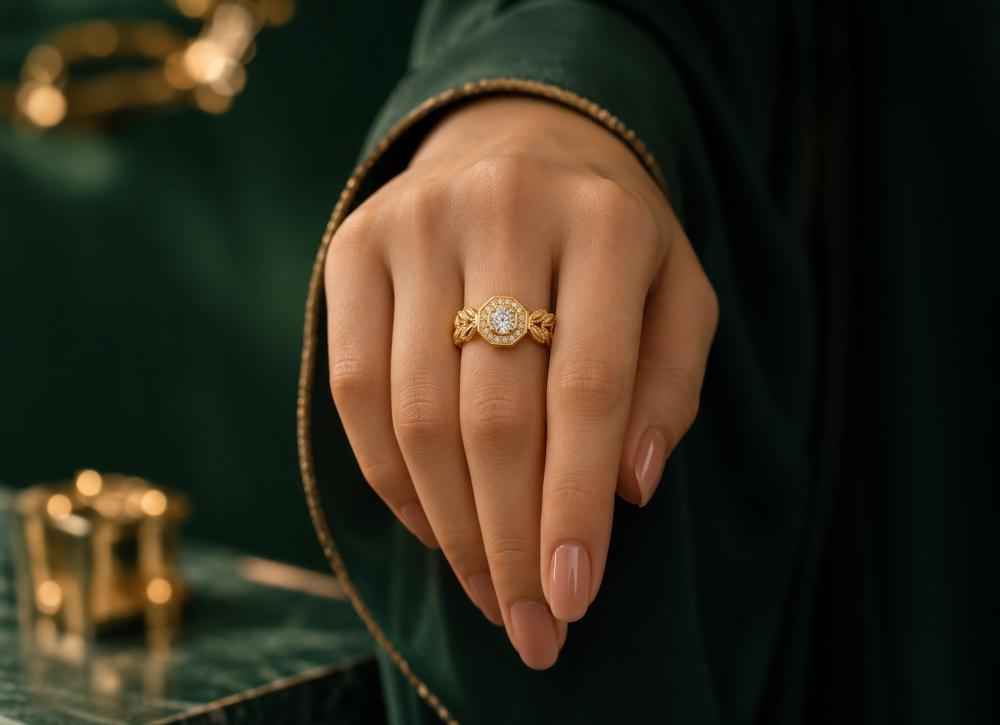
There's no single rule for which finger a ring should go on — it really comes down to social custom, the occasion, and the message you want the ring to carry. Generally, fashion rings are worn on the ring finger, pinky, or index finger, while the left ring finger is linked to engagement or wedding rings in most Gulf societies. In the end, the right finger for you depends on your personal taste and the design of the piece itself.
What Does Wearing a Ring on Each Finger Mean?
Each finger carries a meaning that many people recognize, even though these are social customs rather than fixed rules. Knowing these meanings can help you pick the right finger depending on the occasion or the message you'd like your ring to send.
- Thumb: Usually linked to confidence and a strong personality — some women wear a ring here as a bold, standout piece.
- Index finger: Symbolizes leadership and ambition, a good choice for those who love a daring look.
- Middle finger: A balanced spot that suits wide rings or simple, minimal designs.
- Ring finger: Most commonly associated with engagement and wedding rings, especially on the left hand.
- Pinky: Ideal for small, slim fashion rings, and often used for stacking with other rings.
Which Finger Is an Engagement or Wedding Ring Worn On?
Engagement and wedding rings are traditionally worn on the ring finger, and in Saudi Arabia and the Gulf, this is usually the left hand — though some families prefer the right hand based on their own customs. This choice is a social tradition passed down through generations, not a fixed religious or scientific rule.
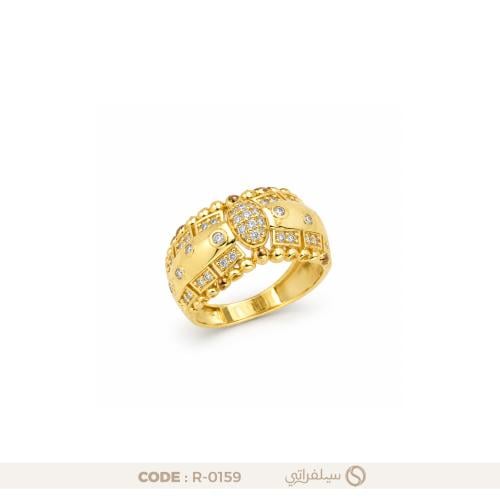
If you're looking for a ring with a special feel for an engagement, or as a gift for someone dear, consider a piece with a striking design, such as a silver oval ring set with zircon. The diamond-like sparkle adds an elegant touch to the finger without needing extra detail.
How Do You Wear Rings on the Pinky and Ring Finger for Everyday Style?
Wearing a ring on the pinky or ring finger for everyday style doesn't follow any strict rule, and you can wear more than one ring together as long as the designs are slim and the colors match. This kind of styling is popular among those who love small accessories that add a refined detail without being overdone.
One practical idea is to wear a simple ring on the pinky alongside a more distinctive piece on the ring finger — like a silver ring with a raised pyramid pattern, plated in rhodium, gold, and black. It adds a lovely contrast of color without feeling heavy on the hand. The idea is for the two rings to complement each other rather than compete for attention.
What's the Difference Between Wearing a Ring on the Right Hand vs. the Left?
There's no real difference between wearing a ring on the right or left hand beyond inherited social customs — some countries link the left hand to wedding rings, while others use the right hand for the same purpose. As for everyday fashion rings, you can wear them on either hand based on comfort and personal preference.
Many women prefer to spread their rings across both hands to avoid crowding one hand — for example, wearing small fashion rings on the right hand while reserving the left for a wedding ring or one standout piece. This kind of distribution gives a balanced, tidy look without piling pieces in one spot.
How Do You Style a Ring for Everyday Looks and Special Occasions?
Styling a ring depends on the occasion — simple, slim rings work well for daily wear, while bolder pieces with more detail are better suited to special occasions and evenings out. Choosing the right finger comes after deciding on the occasion first.
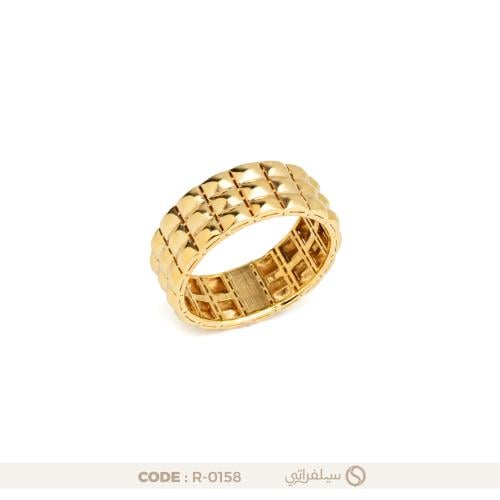
For everyday style, a piece like a silver ring with a wavy pattern, plated in rhodium and gold, works well — its simple design suits almost any finger without looking overdone. For occasions and evenings out, a ring with three interlocking rows, plated in rhodium and gold, gives a stronger presence on the hand and looks best on the ring finger or middle finger, where its details stand out clearly. You can also stack more than one ring together if the colors work well together, such as pairing a gold-plated piece with a silver rhodium one — just avoid wearing too many at once so the hand doesn't look crowded.
How Do You Take Care of a 925 Sterling Silver Ring?
Silveraty rings are made from 925 sterling silver, meaning they contain 92.5% pure silver, and are rhodium plated for a lasting silver shine. The sparkling stones are cubic zirconia, which give the ring a diamond-like sparkle without being a natural gemstone.
Every ring arrives in an elegant box with a gift pouch, making it a practical choice whether you're keeping it for yourself or giving it as a gift. Shipping is free on orders over 300 SAR, and you can also split your payment through Tabby or Tamara, whichever suits you best. As for our guarantee, we ensure the piece you receive matches the same specifications shown.
Frequently Asked Questions About Which Finger to Wear a Ring On
Is there a specific finger for an engagement ring?
There's no strict rule, but social custom in most Gulf countries is to wear the engagement ring on the ring finger, usually on the left hand, depending on the family's traditions.
Can you wear more than one ring on the same hand?
Yes, you can wear more than one ring on the same hand as long as the designs match in color and size — just avoid stacking too many pieces at once so the look stays neat.
What's the difference between the zircon in Silveraty jewelry and a diamond?
The cubic zirconia used in Silveraty rings is a lab-created stone with a diamond-like sparkle, and it's completely different from a natural diamond or natural zircon mineral.
How do I find the right ring size for my finger?
It's best to measure the circumference of the finger you'll wear the ring on using a measuring tape or a piece of string, then compare it to the size chart on the product page before placing your order.
If you're looking for a ring that matches your style and your look, browse Silveraty's collection of 925 sterling silver rings and pick the piece that suits the finger and the occasion you have in mind.